

Enhancing Flood Control Reliability at Waterbury Dam
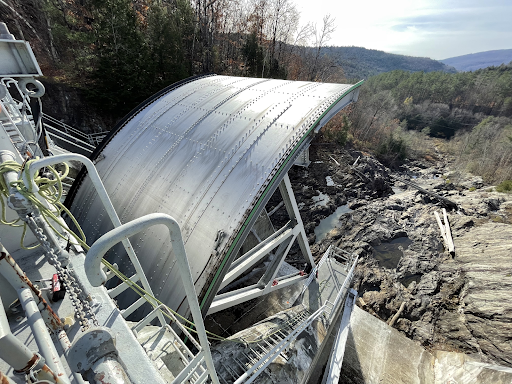
During routine maintenance at Waterbury Dam, the U.S. Army Corps of Engineers (USACE) identified operational behaviors suggesting potential excess resistance in the gates’ trunnion pins. that raised concerns about the performance of the dam’s spillway gates. Given the critical role these gates play in flood control, ensuring reliability of the dam’s spillway gates was essential.
To assist GEI Consultants in addressing these concerns, BDI conducted a comprehensive investigation to quantify the forces experienced during gate operation.
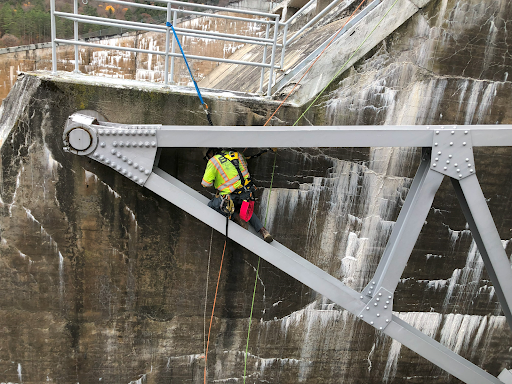
BDI deployed instrumentation and testing methodologies tailored to evaluate all three spillway gates at the dam. Using a gate-specific sensor configuration, BDI captured real-time structural and mechanical responses during gate operation, enabling calculation of trunnion pin resistance and hoist lift forces.
From the testing, BDI uncovered two key findings:
- Asymmetrical Lift Forces: Two gates exhibited uneven hoist forces, primarily due to the non-uniform placement of motors and drive shafts as part of the design.
- Excessive Trunnion Resistance: One trunnion showed flexural stress levels ten times higher than the others, suggesting this location was experiencing significant resistance during operation. Further inspection revealed a misalignment of nearly 3 degrees between the pin and its intended axis of rotation.
These insights helped GEI recommend targeted maintenance actions to USACE in order to ensure that Waterbury Dam remains a dependable asset for flood control in future high-water events.