

Evaluating the Newark Airport Monorail Guideway
As part of the evaluation of the Newark Airport Monorail Guideway, BDI completed live-load testing, deflection modeling, and a 90-day continuous monitoring program to assess how the guideway was performing under real-world operating conditions.
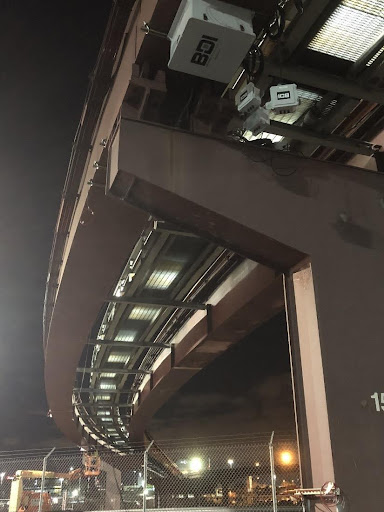
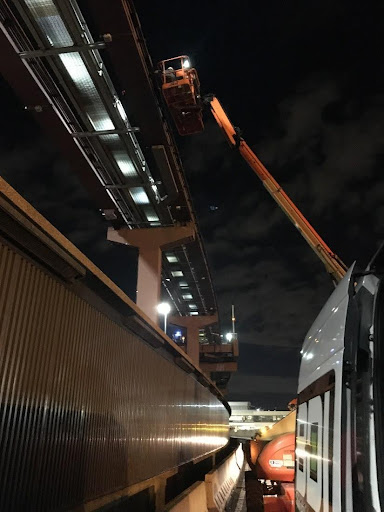
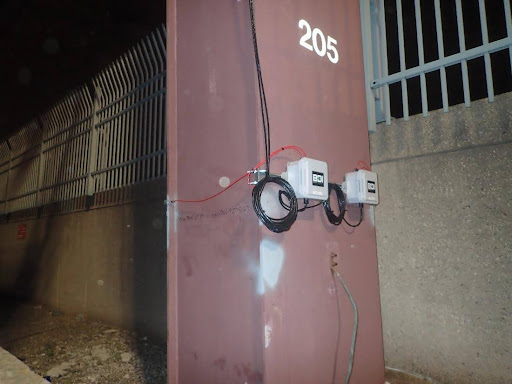
Instrumentation was installed at three representative sections of the guideway, with sensors placed on both the track girders and supporting piers. These sensors captured stress responses during controlled train runs at various speeds, helping engineers understand how loads were distributed and how the structure responds dynamically.
Using data from the load tests, BDI developed calibrated finite element models to estimate deflections across key spans. These models helped identify areas of higher flexibility and informed recommendations for future inspection and maintenance priorities.
During the monitoring phase, BDI’s remote data acquisition system recorded strain data continuously, enabling fatigue analysis and long-term performance tracking. The results indicated that stress levels varied across the guideway, with some sections and piers experiencing higher ranges than others. These findings helped HDR and the Port Authority prioritize areas for further evaluation and supported decisions about long-term asset management.
BDI’s final recommendations emphasized the importance of continued monitoring at select locations, especially where stress ranges were elevated or structural behavior was more variable. The project demonstrated the value of combining short-term testing with long-term data collection to build a complete picture of structural health.
BDI was proud to support the safe and efficient operation of the Newark Airport Monorail through advanced instrumentation and data-driven insights.