

Sitka Bridge
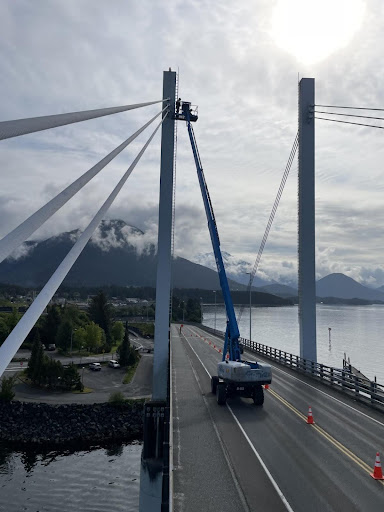
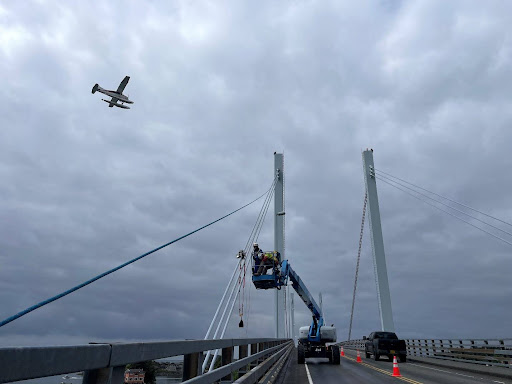
Sitka Harbor / John O’Connell Bridge in Sitka, AK is a historic civil engineering landmark and one of the oldest cable-stayed bridges in the US. Under Alaska DOT’s inspection program, this structure requires a special in-depth inspection every decade. As part of the inspection team, BDI conducted a comprehensive evaluation of the stay cables. Our work included:
- Cable Dynamic Testing: Using BDI’s custom-built accelerometers and STS (Structural Testing System) hardware and software, high-frequency acceleration data was collected from vibrating cables. Our engineers analyzed the data to identify vibration modes and determined in-situ cable forces using the Taut Cable Vibration Method.
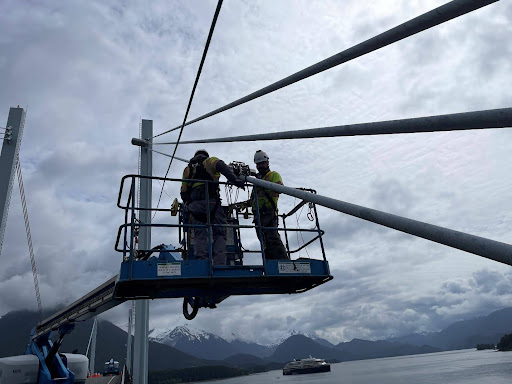
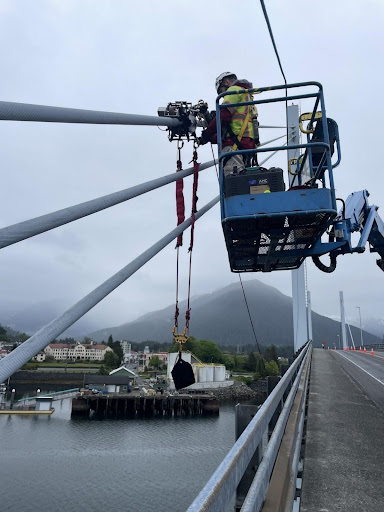
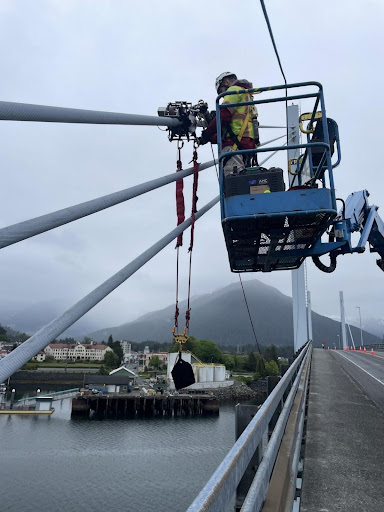
- Magnetic Flux Leakage (MFL) Testing: All 24 cables were tested for potential loss of cross section and/or wire breaks. This technology works by magnetizing the cables and detecting flux leakage through the magnetized cables.
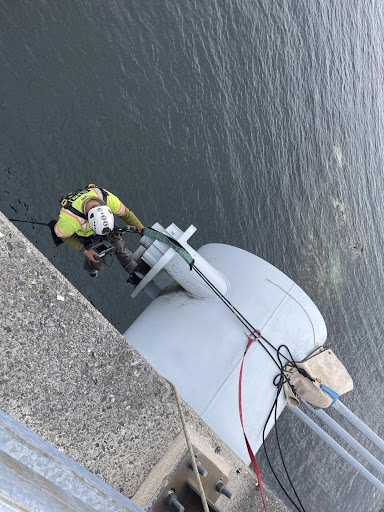
- Ultrasonic Testing (UT): Critical anchorage components—including all pins and spanner nuts—were tested using ultrasonic waves to detect internal flaws (indications) not visible through standard visual inspection.
This project required a diverse set of certifications and expertise, including ASNT UT certification, SPRAT rope access certification, and specialized training for MFL and STS. BDI’s team used rope techniques to access pins and rig the MFL device. Findings showed that no significant change in cable tension or condition had occurred since the previous in-depth inspection. MFL provided new insight into the cable condition and indicated minimal cable degradation, with no localized faults and maximum section loss of just 0.5%. However, UT results revealed increased indications in the spanner nuts. To help ensure continued structural integrity of these elements, BDI provided recommendations for further testing and analysis.