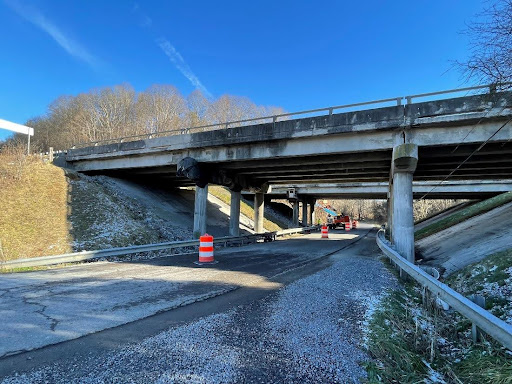


Structural Evaluation of I-81 Bridges Following Concrete Repairs
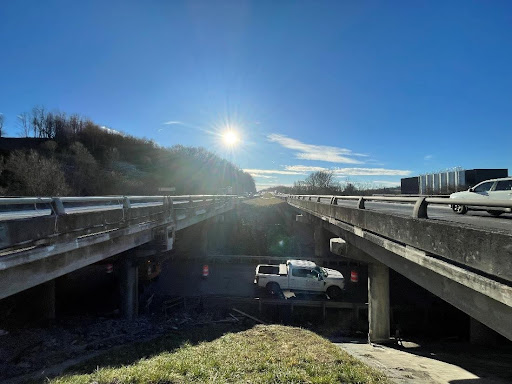
The Virginia Department of Transportation engaged BDI to perform a comprehensive structural evaluation of two twin reinforced concrete T-beam bridges along Interstate 81 in Smyth County, VA — an essential corridor for heavy truck traffic. After a construction contractor completed concrete repairs, including the application of a latex-modified concrete (LMC) overlay to the bridge decks, VDOT sought to verify the effectiveness of the rehabilitation work. The goal was to assess the bond integrity of the overlays, evaluate their contribution to structural performance, and confirm their effectiveness in improving the safety and serviceability of the structures moving forward.
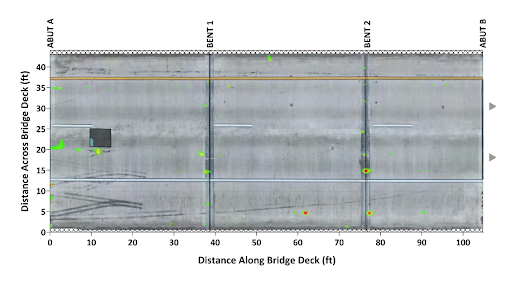
BDI’s approach combined non-destructive testing and evaluation (NDT-E) with live load testing and advanced engineering analysis. Using our proprietary SounDAR technology, BDI investigated the bond between the LMC overlay and the underlying concrete substrate by searching for delaminations caused by poor bonding. To complement this, drone-based high-resolution imaging was used to inspect the bridge decks for surface defects, as well as generate detailed delamination maps from the SounDAR data.
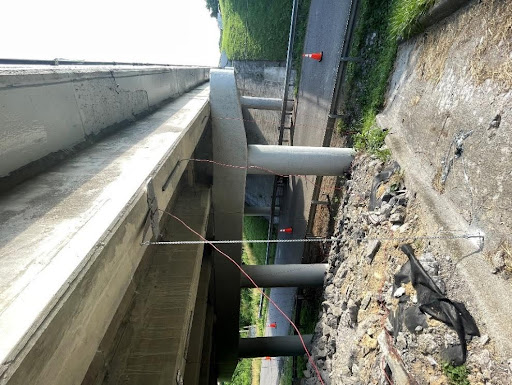
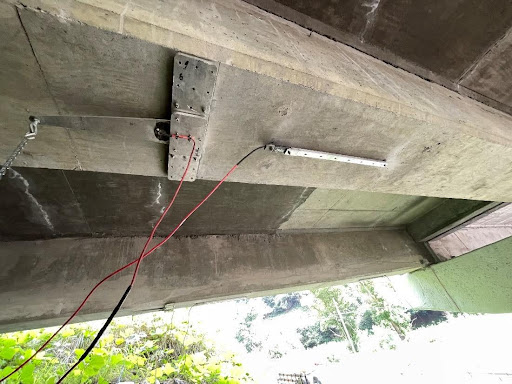
Strain, rotation, and displacement data collected from live load testing provided insights into the overall structural performance of the bridges, including how the overlays participated in load resistance. The data was also used to calibrate finite-element models of the bridges, enabling BDI to generate updated load ratings that reflected the as-repaired condition of the structures.
The results of the evaluation were highly encouraging. The overlays were found to be well-bonded and actively participating in load resistance through the designed T-beam behavior. Only about 0.25% of the total deck and overlay area showed signs of defects, mainly localized to a previously spalled and patched region. Load ratings increased due to the improved condition of the structures, the structural contributions of the LMC overlays, and a more accurate quantification of live load distribution.
Ultimately, BDI’s testing and analysis confirmed that the completed concrete repairs were effective and that the bridges were performing well. These findings provided VDOT with confidence in the safety, durability, and long-term serviceability of the structures—ensuring continued reliability along a critical transportation route.