

The Pearl Harbor Memorial Bridge
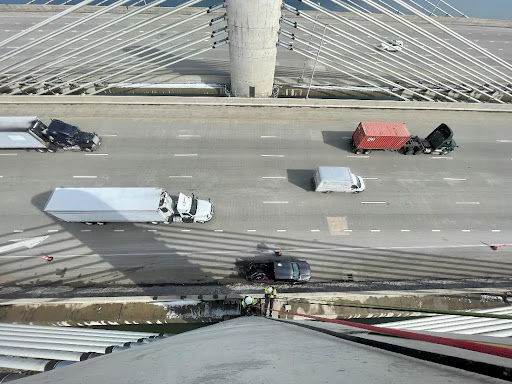
The Pearl Harbor Memorial Bridge (Q Bridge) is a twin extradosed structure carrying Interstate 95 over the Quinnipiac River in New Haven, Connecticut. Since its opening in 2012, inspectors have noticed cracking in several areas of the bridge, including the tops of the prestressed concrete box girders, the faces of the cable-stay towers, and near cable anchorages at the deck edges.
To investigate the causes of these cracks and monitor the bridge’s performance over time, the Connecticut Department of Transportation (CTDOT) contracted BDI to design, install, and operate a comprehensive Structural Health Monitoring System (SHMS).
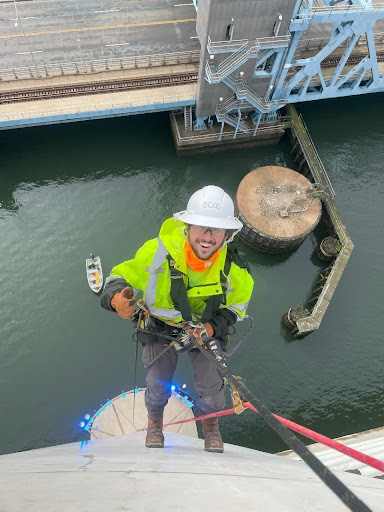
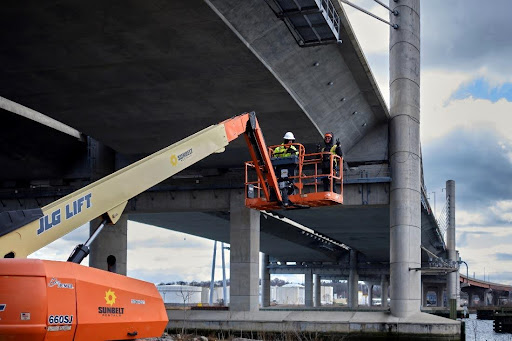
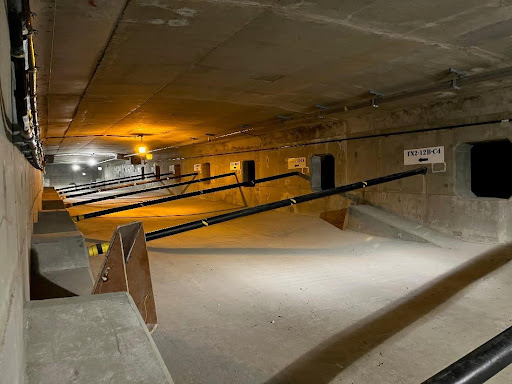
The system was engineered to meet strict contract specifications and included a wide array of instrumentation. Strain gages were installed inside the cells of the box girders, on the exterior faces of the towers, and within the steel anchor boxes that secure the stay cables inside the towers. These sensors provided detailed measurements of stress development at key structural locations.
Rotation sensors were placed at the tops of the towers to monitor tower movement, while crackmeter displacement sensors were installed at observed crack locations along the box girders, tower faces, and near cable anchorages to track crack activity.
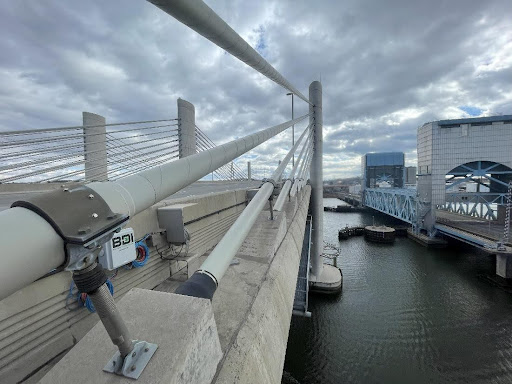
To assess the condition of the stay cables, BDI installed accelerometers along a full cable fan on one side of a tower. These sensors measured vibration frequencies, helping to identify any changes that might indicate a loss of tension due to cracking at anchorages.
Displacement sensors were also placed at select bearing locations to verify that the bridge was expanding and contracting as designed. Environmental sensors (including temperature, humidity, and wind sensors) were integrated into the system to correlate structural responses with changing weather conditions.
The system was designed to automatically record and wirelessly transmit data to a secure web portal for real-time visualization and reporting. BDI maintained full operational performance of the system throughout the monitoring period, responding to outages and sensor issues on short notice.
In addition to continuous monitoring, BDI conducted operational testing at project start, after Year 1, and after Year 2. These tests included live load testing of both northbound and southbound lanes, as well as vibration testing of the instrumented stay cables.
Monthly reports provided by BDI summarized system performance, highlighting notable trends and informing maintenance needs. All monitoring and testing data were shared with CTDOT’s engineering consultant to aid in diagnosing the causes of cracking and developing long-term management strategies for the bridge.
BDI’s integrated monitoring and testing program delivered critical insights into the structural behavior of one of Connecticut’s most prominent bridge assets—supporting informed decision-making and proactive infrastructure stewardship.