

Marshall Space Flight Center NDT-E
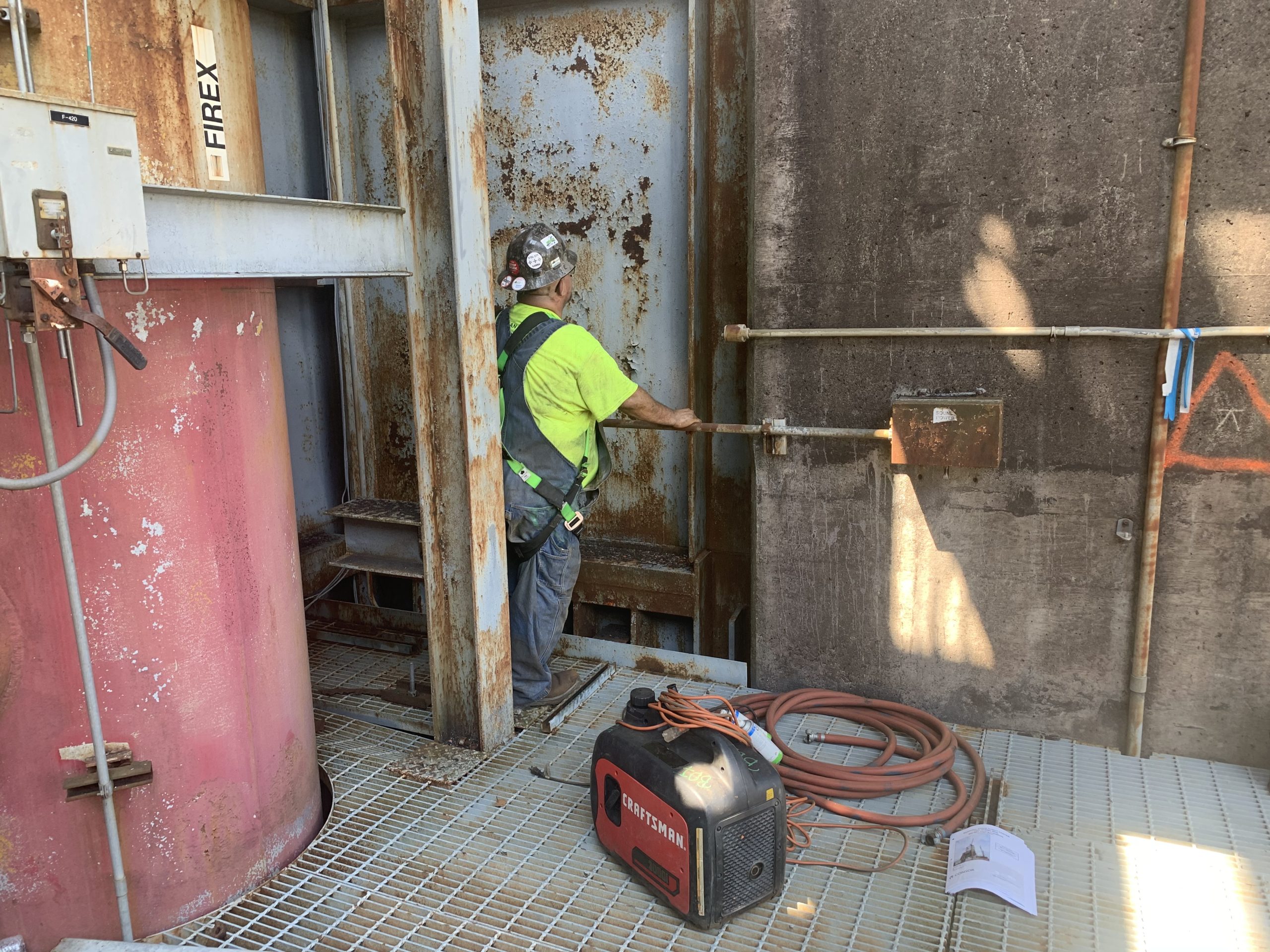
BDI was contracted to provide the inspection, evaluation, and testing of the Marshall Space Flight Center Test Stand 4670 in Huntsville, Alabama, specifically levels 12-15. The Test Stand consists of four post-tensioned concrete legs that are 30 square ft along the top and 48 square feet along the bottom. These four legs support a platform of 18-foot-deep steel plate hexagon girders where the engines are mounted during testing. The overall goal of this project was to collect information about cracks and other defects observed in 12 girders of the test stand. Seventeen test locations were selected and seven test locations were selected by BDI. 10 random locations were selected in the field. A total of 52 welds were tested.
The age of the structure, environmental conditions, state of corrosion, infiltration of water, and modifications from the original design were concerning to the design strength and integrity of the structure. Due to the uncertainty of the current condition of the 18-foot-deep girders, nondestructive testing via magnetic particle testing and phased array ultrasound testing was combined with visual inspection to identify defects in the structure. Based on the results of the random weld testing locations, Magnetic Particle Testing and Phased Array Ultrasound Testing identified no cracks in any of the horizontal or vertical butt welds. 11 of the 14 plug welds tested did show indications of cracking, but no cracks were found propagating into the web of the steel girders. Based on the results of the visibly identified weld testing locations, cracks are visible, or indications of cracking exists in 10 of 20 inspected locations. No cracks were found propagating into the web of the steel girders.