

Emergency Evaluation of Seattle’s West Seattle High Bridge
When rapid crack growth forced the closure of the West Seattle High Bridge in 2020, the Seattle Department of Transportation (SDOT) engaged BDI to evaluate the structure and support repair efforts. As the primary connection between West Seattle and the rest of the city, the bridge carries significant traffic volumes and serves as a critical transportation link, making its reopening a top priority.
To support the evaluation, BDI performed a variety of advanced nondestructive evaluation (NDE) techniques and installed a comprehensive Structural Health Monitoring (SHM) system. By leveraging BDI’s multidisciplinary team, engineers developed a detailed understanding of the extent, causes, and progression of the cracking while also assessing the integrity of the bridge’s post-tensioning tendons, grout-filled ducts, concrete, and grout materials.
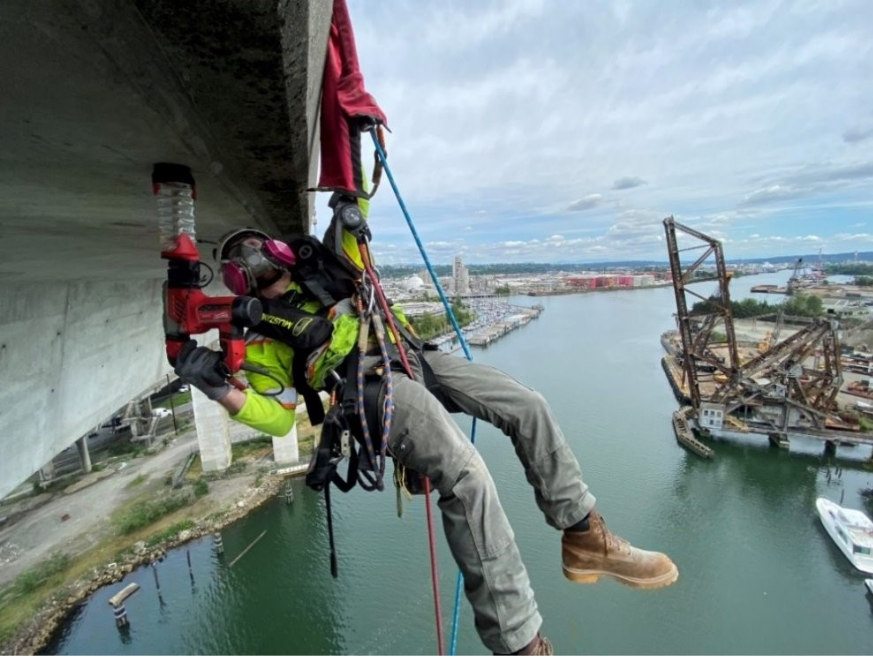
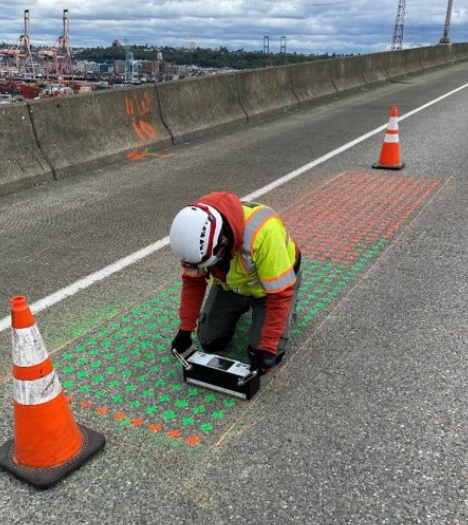
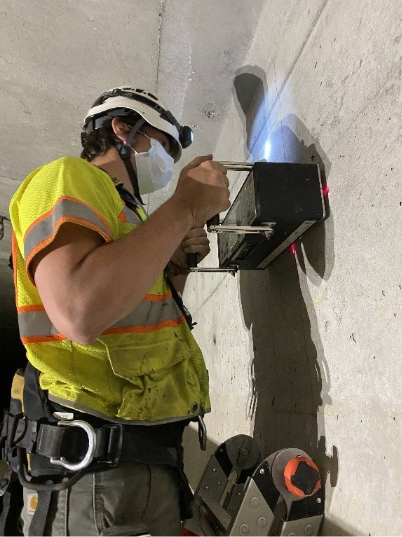
To complete the investigation, BDI utilized a combination of Ultrasonic Pulse Velocity (UPV), Ground Penetrating Radar (GPR), Impact Echo (IE), and Ultrasonic Tomography (MIRA). The team also performed exploratory openings and material sampling to validate NDE findings and evaluate the potential for corrosion-related deterioration. In addition, BDI designed, manufactured, and installed a high-speed SHM system to continuously monitor crack growth and propagation.
BDI’s engineers and field technicians conducted all field testing, data collection, and analysis, integrating the results into a comprehensive condition assessment. The team delivered detailed reports and exhibits identifying defective grout locations, crack depths, extents, and propagation patterns, as well as chloride concentrations throughout the structure.
By identifying the root causes of deterioration and pinpointing areas requiring repair, BDI provided the critical information SDOT needed to develop targeted rehabilitation strategies, safely restore service, and support the long-term performance of this vital bridge.