


Crosshole Sonic Logging (CSL)
By incrementally lowering an acoustic transmitter down a drilled shaft or borehole in parallel with a receiver, the soil or concrete between the two sensors can be characterized for geophysical and quality purposes.
Read MoreElectromagnetic Methods
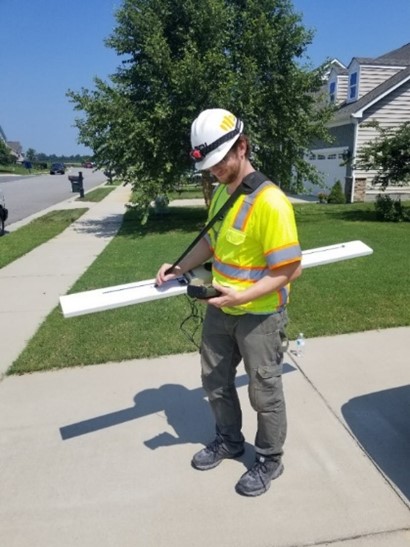
By directing a low-frequency electrical field pulse into soil, the response can be measured to locate subsurface anomalies and map layers. This tool is typically used for surveying purposes over large areas.
Read MoreGround Penetrating Radar (GPR)
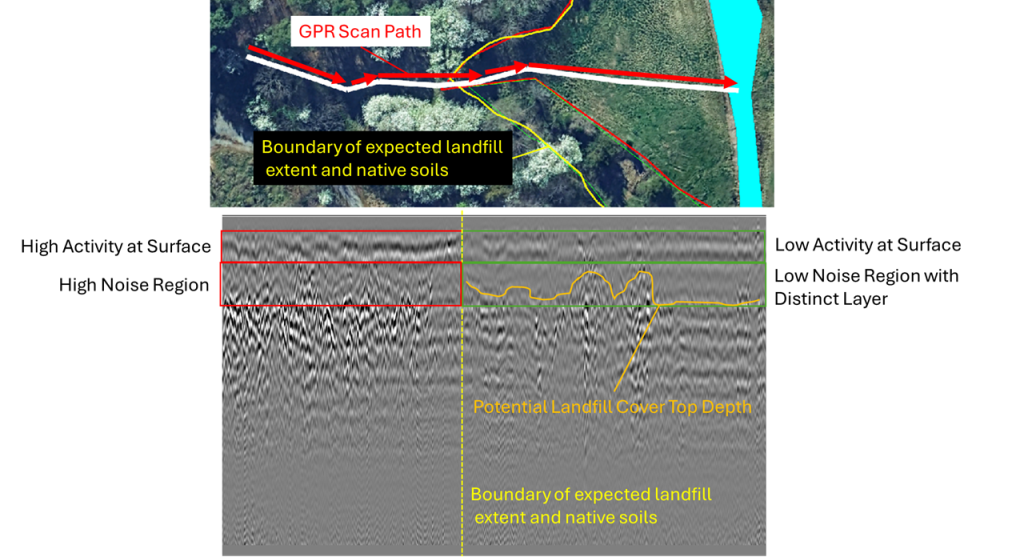
By directing an electromagnetic wave into soil and measuring the response, features such as voids, water, debris, and other features of interest can be detected. This work is often completed in scans on a test grid to generate a 3D view of the features and their depth with GPS-encoding allowing for actionable mapping. BDI has developed its own ASNT TC-1A certification program for its GPR professionals and deploys a variety of different technology platforms depending on the speed, precision, or depth of testing needed.
Read MoreParallel Seismic Testing (PS)
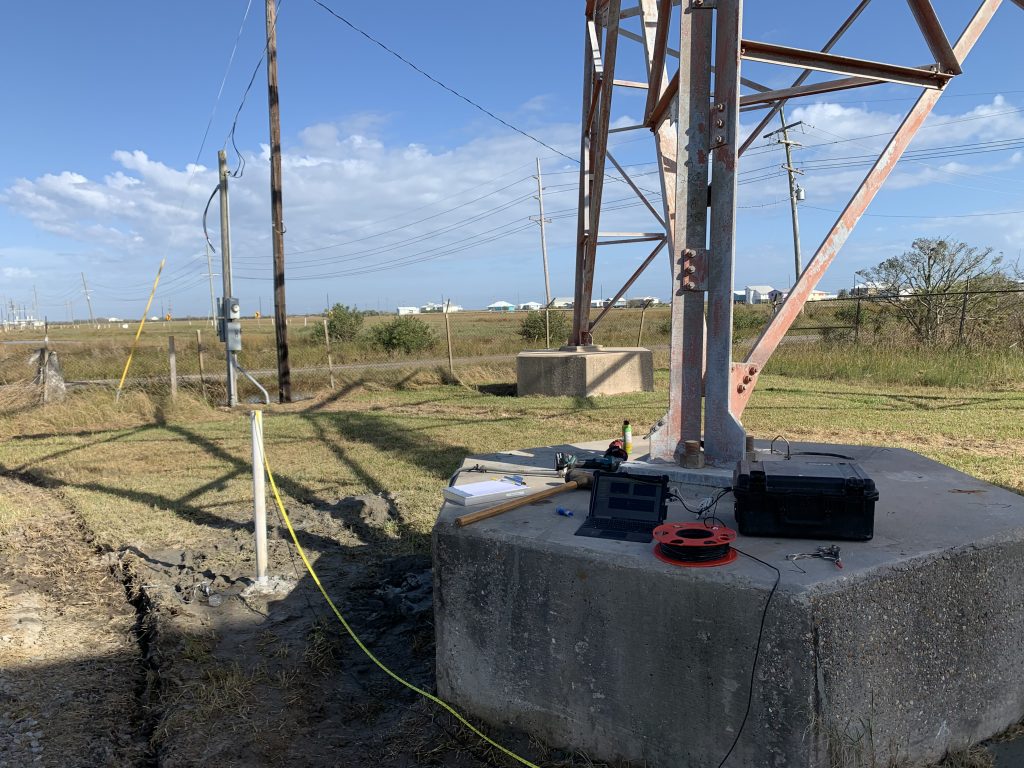
By drilling a water-filled, PVC-lined borehole parallel to a given structure embedded in soil, a sensor can be incrementally lowered beside the structure as the structure is impacted to measure the time required for the vibration to travel from the structure to the sensor. Analysis of this travel time can be used to measure the embedded depth of the structure.
Read MoreUltraseismic Testing (US)
By inducing an impact in a given timber pile that has been instrumented with sensors at known intervals, features along the length of the pile (including the pile tip) can be measured by the reflections gathered by the sensors. BDI uses an analysis method that leverages the placement of the sensors relative to one another to enhance the accuracy of their results.
Read MoreSonic Echo-Impulse Response (SE-IR)
By inducing an impact in a given timber structure, the response can be gathered by an attached accelerometer to measure concrete dimensions, defects, and other features based on the reflections identified in the collected signals.
Read MoreAcoustic Differential Method
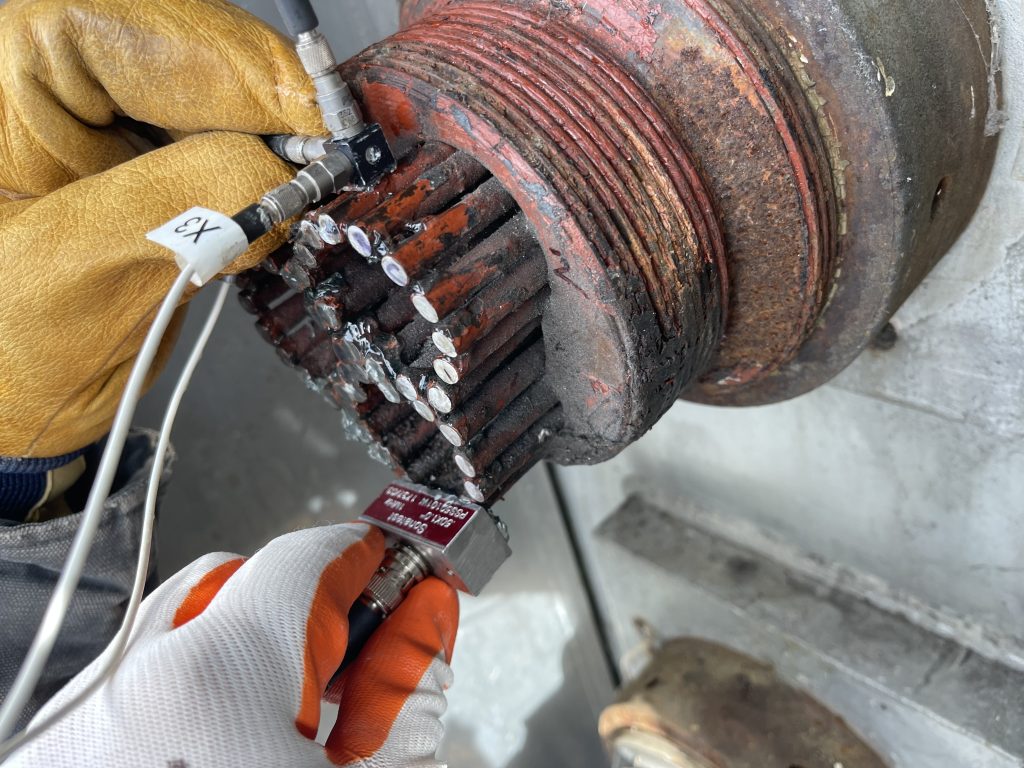
By inducing an impact in an anchor rod and measuring the response using a sensor array developed by BDI, the compressive and shear wave velocities of the rod can be calculated and then combined with known material/geometric properties of the rod to estimate the tension in the rod.
Read MoreMagnetic Flux Leakage (MFL)
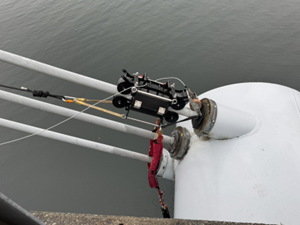
By applying a strong magnetic field to steel and steel cables, locations at which magnetic flux leakage is detected tend to indicate discontinuities, corrosion, breaks, and notches.
Read MoreMagnetic Particle (MT)
After applying a thin film of magnetic particle dust to a given piece of steel or weld, application of a magnetic field causes the dust to aggregate at areas of flux leakage which typically indicate the presence of shallow or thin defects in the steel or weld.
Read MorePhased Array Ultrasonic Testing (PAUT)
By directing a sequence of ultrasonic waves from a transducer array into a piece of steel, a scanning beam can be used to provide a high-resolution probe of any internal defects such as cracks or voids within the steel or welds.
Read More