


On-Call Contracts: A Smarter Procurement Path for Load Testing, Deck Evaluation, and NDT
By BDI | May 2026
State DOTs across the country are facing a familiar challenge: aging infrastructure demands increasingly sophisticated evaluation, but traditional project-by-project procurement can be slow, rigid, and poorly suited to the specialized nature of diagnostic load testing, bridge deck evaluation, and nondestructive testing (NDT). In response, a growing number of states are turning to on-call contracts as a more effective procurement mechanism – one that puts the right technology and expertise within reach exactly when it’s needed most.
The Challenge with Traditional Procurement
When a bridge needs to be evaluated – whether due to a deteriorating deck condition, an unexpected load posting, a permit vehicle request, or a post-event damage assessment – time matters. Traditional procurement cycles, which can involve drafting scopes of work, advertising solicitations, evaluating proposals, and negotiating terms, often take weeks or even months to complete. For agencies managing thousands of structures, that timeline simply doesn’t align with the pace at which decisions need to be made.
Beyond timing, there’s the challenge of specificity. Load testing, deck evaluation, and NDT each require highly specialized equipment, trained personnel, and deep technical expertise. These aren’t commodity services. A standard low-bid procurement process can make it difficult for agencies to select providers based on qualifications and capability – the factors that matter most when the goal is accurate, field-verified structural data.
This process has long been cited as a challenge in the industry. So much so that the FHWA just released a procurement guideline to help states quantify the key elements of bridge evaluation RFPs.
Why On-Call Contracts Work
On-call contracts – sometimes referred to as indefinite delivery/indefinite quantity (IDIQ) contracts, task-order contracts, or program-specific contracts – address these challenges by pre-qualifying service providers through a competitive selection process and then allowing the agency to issue individual task orders as needs arise. This model offers several key advantages for structural testing and evaluation services.
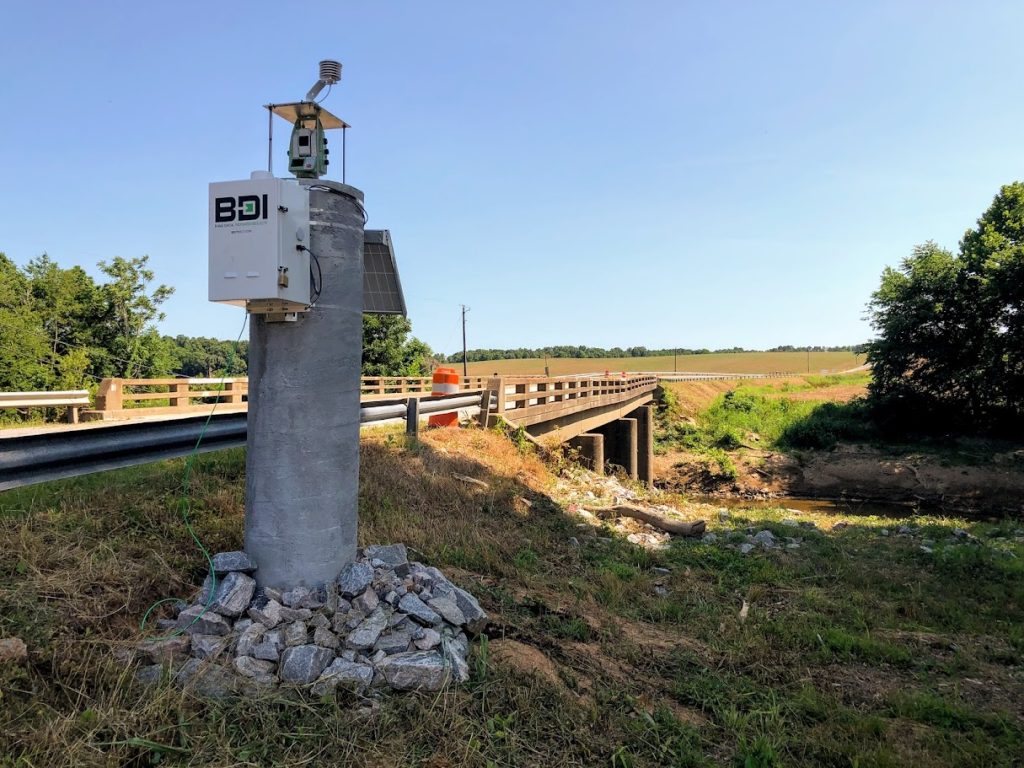
Speed of Deployment
Once an on-call contract is in place, agencies can mobilize qualified teams rapidly. When a bridge requires an urgent load test to evaluate its capacity after damage or deterioration, or when a deck evaluation is needed to inform an upcoming rehabilitation project, the procurement step has already been completed. Work can begin as soon as a task order is scoped and issued. This is particularly valuable for emergency situations, where a rapid structural assessment can mean the difference between an extended closure and a safe, timely reopening.
Access to the Right Technology
The field of structural evaluation has advanced considerably over the past decade. Technologies such as ground-penetrating radar (GPR), infrared thermography (IR), impact echo, ultrasonic testing, and high-speed bridge deck scanning platforms now offer agencies faster, safer, and more comprehensive evaluation capabilities compared to traditional methods like chain dragging and hammer sounding. However, these technologies require significant capital investment and trained operators.
On-call contracts give agencies access to providers who maintain fleets of advanced equipment and teams of certified technicians, without requiring the agency to own or operate the technology itself. When a specific need arises – whether it’s a diagnostic load test on a posted structure, a network-level deck condition survey, or an ultrasonic inspection of steel pins – the agency can task the appropriate technology for the job at hand.
Flexibility Across Service Types
One of the most compelling aspects of on-call contracts for structural testing and evaluation is their ability to span multiple service types under a single procurement vehicle. A well-structured on-call contract can encompass diagnostic load testing for load rating, bridge deck evaluation using NDT technologies, steel inspection services (visual, ultrasonic, magnetic particle, and more), structural health monitoring, engineering analysis and load rating, and scour evaluation and unknown foundation assessment.
This flexibility means that as an agency’s needs evolve over the contract period, the services can scale and adapt accordingly. A task order might begin as a straightforward deck evaluation and expand to include load testing and refined analysis if the initial findings warrant a deeper investigation.
Consistency and Quality
Because on-call contracts are awarded based on qualifications rather than lowest price for each individual task, agencies can build sustained working relationships with providers who understand their bridge inventory, their standards, and their decision-making processes. This continuity leads to higher quality deliverables, more consistent data, and better integration with the agency’s asset management programs over time.
A Growing Trend Among State DOTs
An increasing number of state transportation agencies are recognizing the value of this approach. Programs like Colorado DOT’s statewide program-specific contracts for bridge ultrasonic testing, pin inspections, and load rating services demonstrate how agencies are creating dedicated procurement vehicles for specialized structural evaluation work. Other states have established similar on-call mechanisms for bridge deck evaluation, load testing, and NDE services – reflecting a broader shift toward procurement strategies that prioritize speed, expertise, and technological capability.
This trend aligns with a growing recognition that advanced evaluation technologies are not replacements for sound engineering judgment, but rather powerful tools that, when deployed effectively, provide the data engineers need to make confident decisions about the safety, serviceability, and remaining life of their structures.
How This Benefits Bridge Owners
For bridge owners and asset managers, on-call contracts for load testing, deck evaluation, and NDT translate to several practical benefits:
Faster decision-making. When questions arise about a structure’s capacity or condition, answers can be obtained in days or weeks rather than months. This is critical for keeping bridges safely open to traffic and avoiding unnecessary postings or closures.
More accurate data. Advanced evaluation methods – diagnostic load testing calibrated with field measurements, multi-technology deck assessments, certified steel inspections – produce higher-quality data than traditional approaches alone. This data supports better-informed decisions about maintenance, rehabilitation, and replacement.
Cost-effective asset management. By identifying the true condition and capacity of structures through field-verified evaluation, agencies can avoid premature replacements, target maintenance where it’s most needed, and extend the service life of their bridge inventory. A diagnostic load test that removes an unnecessary posting, for example, can save an agency the cost of a bridge replacement while maintaining public safety. Also recommendations can be based on data rather than subjective information.
Scalability. On-call contracts can accommodate a single task order or dozens over the contract period, making them suitable for agencies of all sizes – from small states with targeted needs to large DOTs managing statewide evaluation programs.
Preservation of legacy contract capacities. A dedicated contract for advanced inspection and testing services prevents the need to utilize existing inspection, load rating, or design contract mechanisms to carry out this specialized work. This helps keep agency contract capacities aligned with the scopes they were intended to accommodate.
Ultimately, the increasing adoption of on-call contracts for load testing, deck evaluation, and NDT reflects a maturation in how transportation agencies approach structural assessment. Rather than treating each evaluation as an isolated procurement event, agencies are building the contractual infrastructure to deploy the right expertise and technology where and when it matters most. The result is a more responsive, more efficient, and ultimately safer approach to managing our nation’s bridge assets.
At BDI, we’ve seen firsthand how on-call contracts enable agencies to move quickly, leverage advanced technology, and make data-driven decisions about their structures. With more than 35 years of experience in diagnostic load testing, NDT, and structural engineering, we’re proud to support state and federal agencies through these forward-thinking procurement programs – helping ensure that the bridges communities depend on every day are safe, well-understood, and managed for the long term.
To learn more about how BDI can support your agency’s structural evaluation needs through on-call or program-specific contracts, contact our team today.