

Rigid Pavement Condition

High-Speed GPR

Rigid Pavement Condition

Concrete is often used as a pavement in harsh or highly trafficked environments to provide additional durability. BDI provides actionable insights through advanced nondestructive evaluation (NDE) and data analysis, helping owners optimize maintenance strategies for longer lasting rigid concrete pavements. Operating in high-performance environments like interstates, bridges, airfields, and industrial slabs, BDI enables data-driven decisions with minimal operational disruption. End deliverables include interactive maps and summary statistics to allow engineers and owners to make informed decisions for pavement preservation.

What Can We Do?

Our post-processing workflows transform complex datasets into actionable insights, technical reports, CAD-based feature maps, deterioration statistics, and tailored repair recommendations, all aligned with local municipality or DOT mandates. BDI strives to find the best means and methods for communicating our work, results, and insights to bridge owners, we develop reports containing content and materials such as:

  • Visual and Thermal

  • Acoustic

  • Electromagnetic

  • Electrochemical

  • Material Sampling

High-Resolution Imaging (HRI)

Infrared Thermography (IRT)
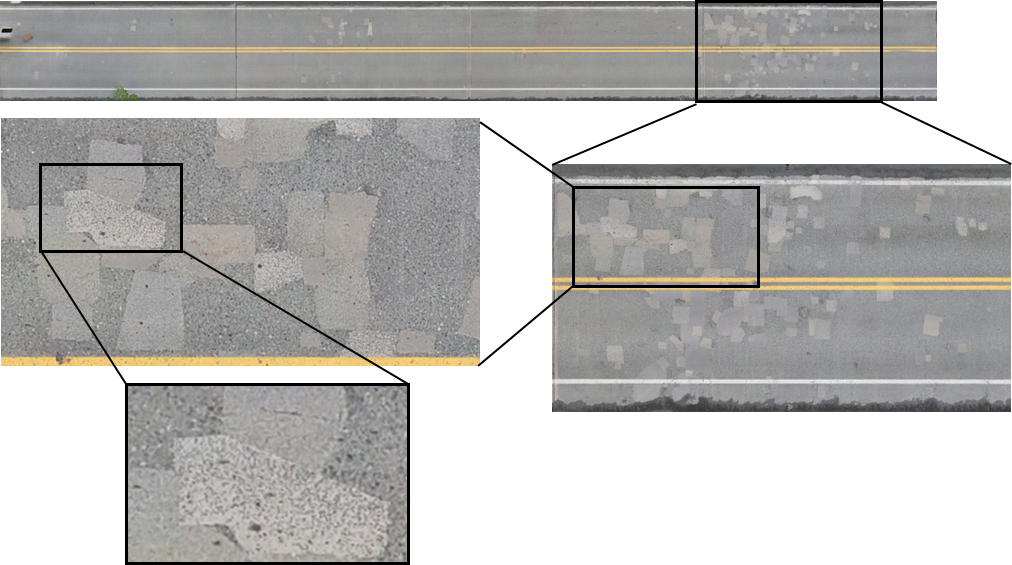
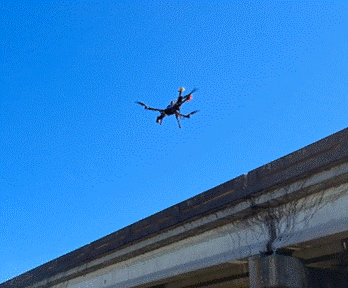
Leveraging high-resolution, high-speed cameras mounted on drones and vehicles combined with AI-enabled photogrammetry platforms, BDI can generate 2D orthophoto and 3D renderings of concrete structures to provide context for other services as well as to measure and map defects such as spalls, cracks, exposed reinforcement, and patching with automation.

Infrared Thermography is an electromagnetic method that involves measuring the infrared energy emitted from a concrete structure and identifying possible defects such as delamination based on unexpected temperature variations. BDI deploys this method using high-precision IR cameras mounted on drones and vehicles to scan entire structures at high-speed with results generated as feature maps.

Deck Acoustic Response (SounDAR) – automated concrete sounding

Impact Echo (IE)

Ultrasonic Tomography (MIRA)

Ultrasonic Pulse Velocity (UPV)

Spectral analysis of surface waves (SASW)

Spectral analysis of surface waves (SASW)

Sonic Echo-Impulse Response (SE-IR)
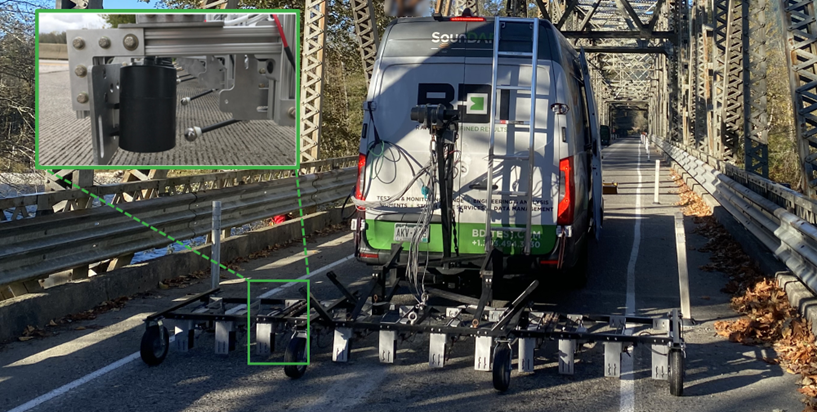
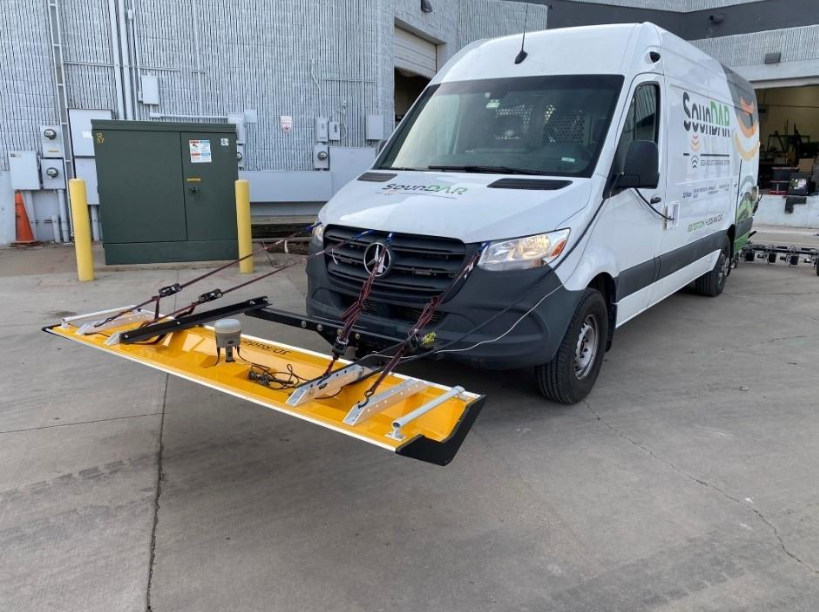
By inducing multiple impacts on a concrete structure on a moving platform and measuring the audible response using a microphone array, delaminations in concrete from the resulting frequency response similar to traditional hammer sounding and impact echo. For nearly a decade, BDI has been a pioneer in this technology developing both its own field data collection system and the AI-ML powered analytics model for measuring and mapping delamination on over 60 million square feet of concrete.

By inducing an impact on a concrete structure and measuring the frequency response, the length and condition of a concrete element can be measured with data typically being collected along a test grid to evaluate the entire element. BDI has developed an efficient field data collection program and automated workflow to accelerate the production of the results.

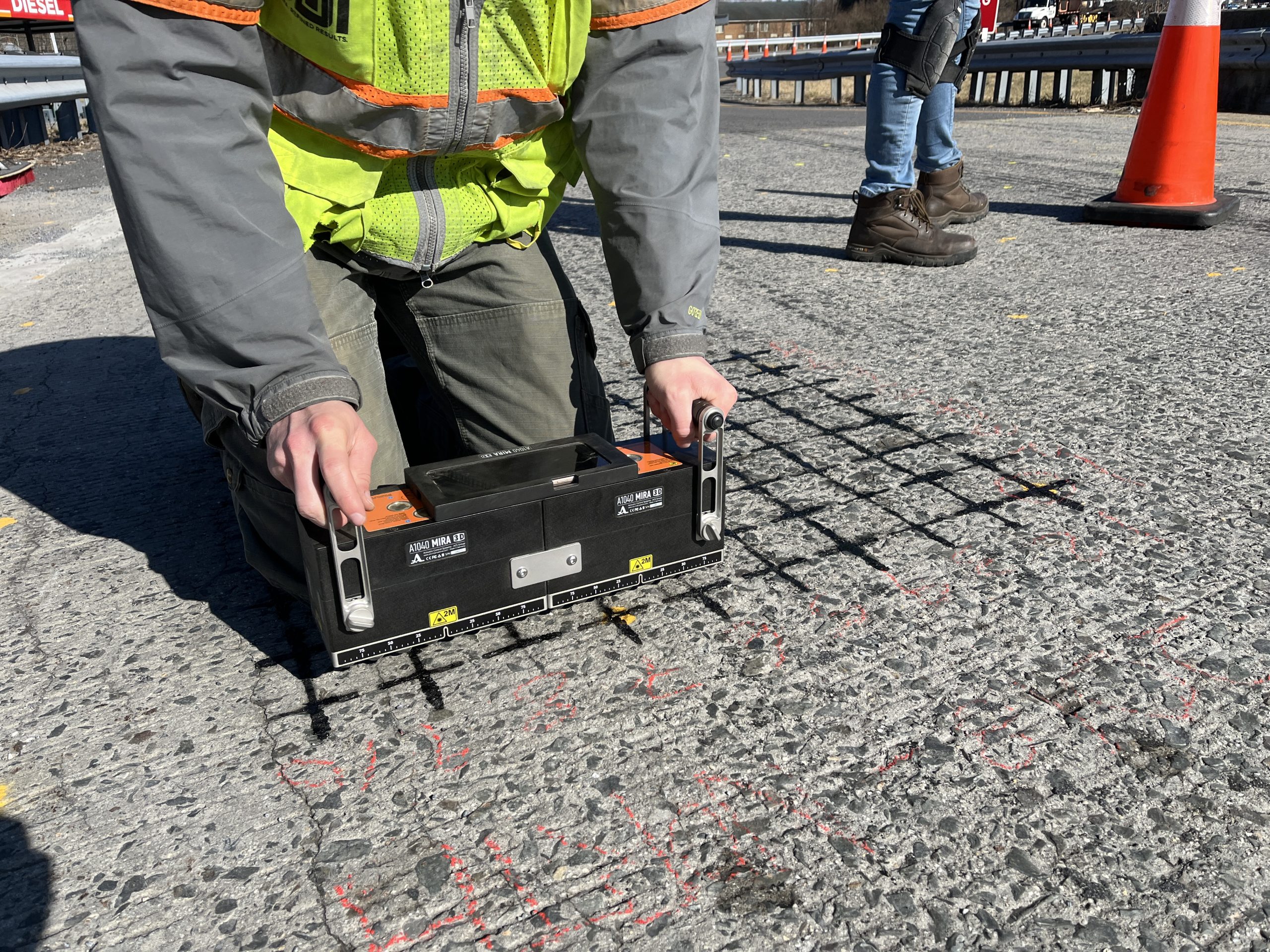
By directing ultrasonic waves from an array of dry-coupled transducers into concrete, the response can be measured by that array to generate a 2D/3D profile scan that allows for the measurement and mapping of subsurface features such as voids, concrete thickness, and other targets of interest.

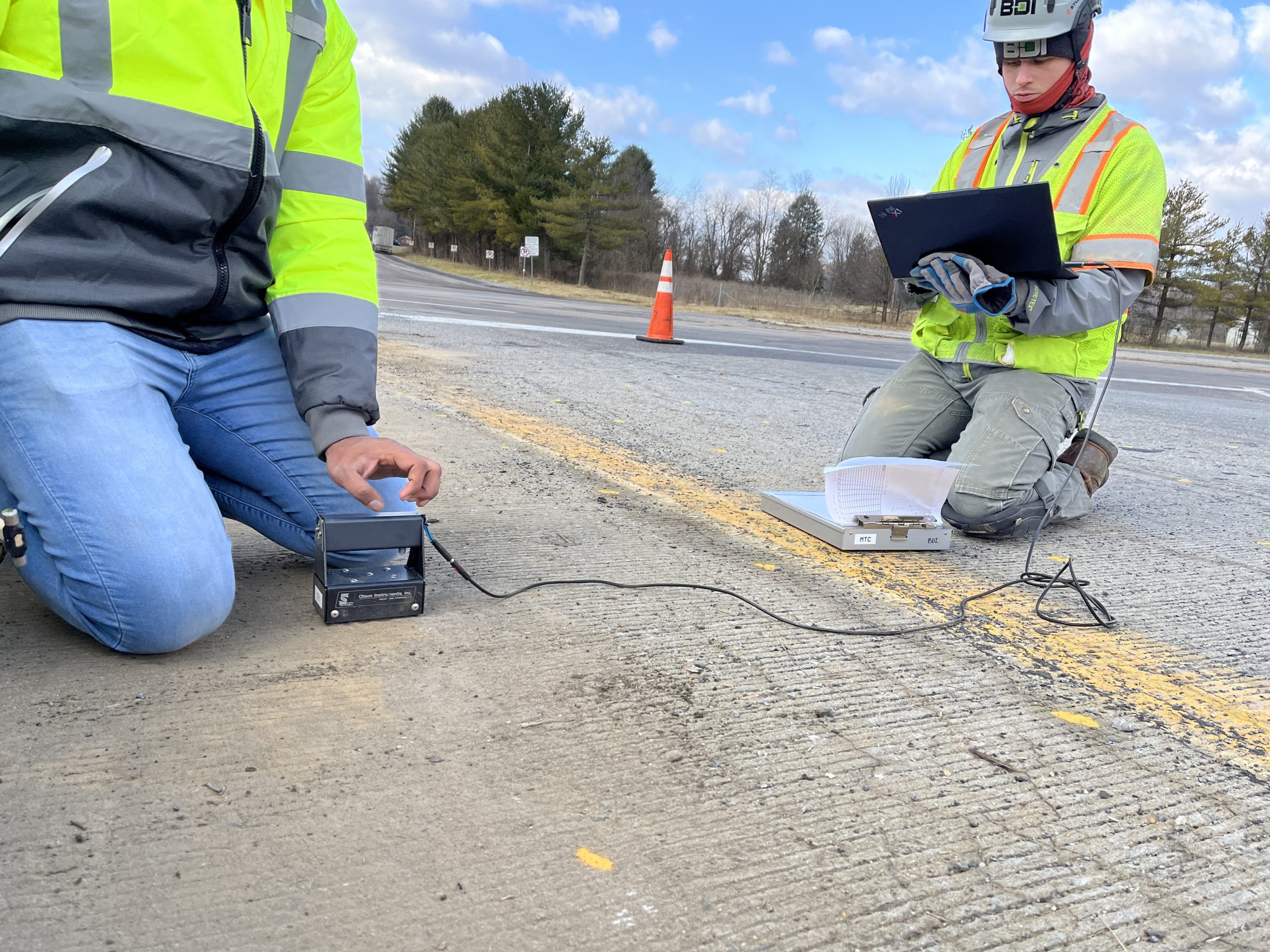
By directing an ultrasonic wave from a single transmitter into concrete, the response can be measured by a single receiver, where the configuration of the transmitter and receiver allows for measurement of concrete thickness, concrete continuity, crack depth, and compressive wave speed.

BDI uses Spectral Analysis of Surface Waves (SASW) to evaluate subsurface stiffness profiles by analyzing the dispersion of surface wave frequencies generated during testing. This technique enables non-destructive assessment of material properties, layer thicknesses, and potential deterioration in pavements and other structural elements.

The impulse response method can be used to quantify a material’s or structure’s reaction to a very short, intense force, or impulse. By analyzing how a system vibrates or reacts after being struck, engineers can extract information about its natural frequencies, damping, and overall dynamic behavior to assess its condition without causing damage.

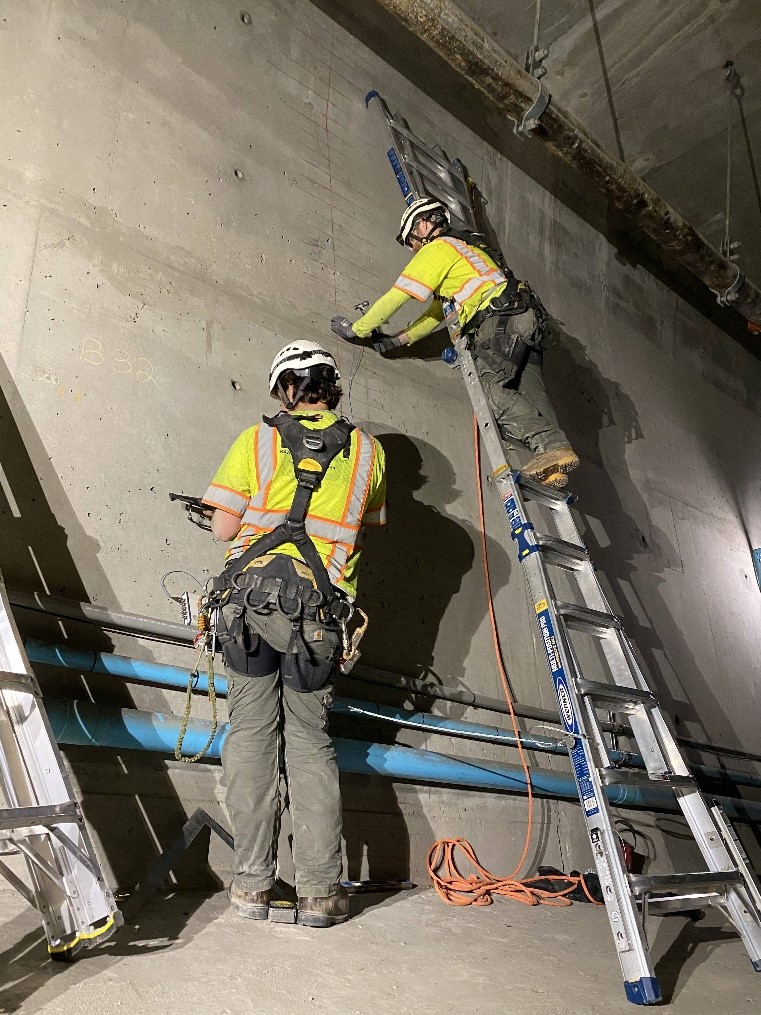
By inducing an impact in a given concrete structure, the response can be gathered by an attached accelerometer to measure concrete dimensions, defects, and other features based on the reflections identified in the collected signals. Multiple tests may be taken along a grid to map out variations in dimensions or localize defects.

High-Speed GPR

Ground Penetrating Radar (GPR)

Non-destructively assess concrete structures by measuring concrete cover depth and mapping reinforcement layout with high-resolution subsurface imaging. This enables accurate detection of rebar position, spacing, and depth, supporting structural evaluations and compliance with design specifications.

By directing an electromagnetic wave into a concrete structure and measuring the response, features such as steel reinforcement, voids, the concrete backwall, and other features of interest can be detected. This work is often completed in scans along a given element on a test grid to generate a 3D view of the features, their depth, and their condition. BDI has developed its own ASNT TC-1A certification program for its GPR professionals and deploys a variety of different technology platforms depending on the speed, precision, or depth of testing needed.

Rapid Chloride Testing (RCT)

Half Cell Potential Testing (HCP)

Electrical Resistivity Testing (ER)
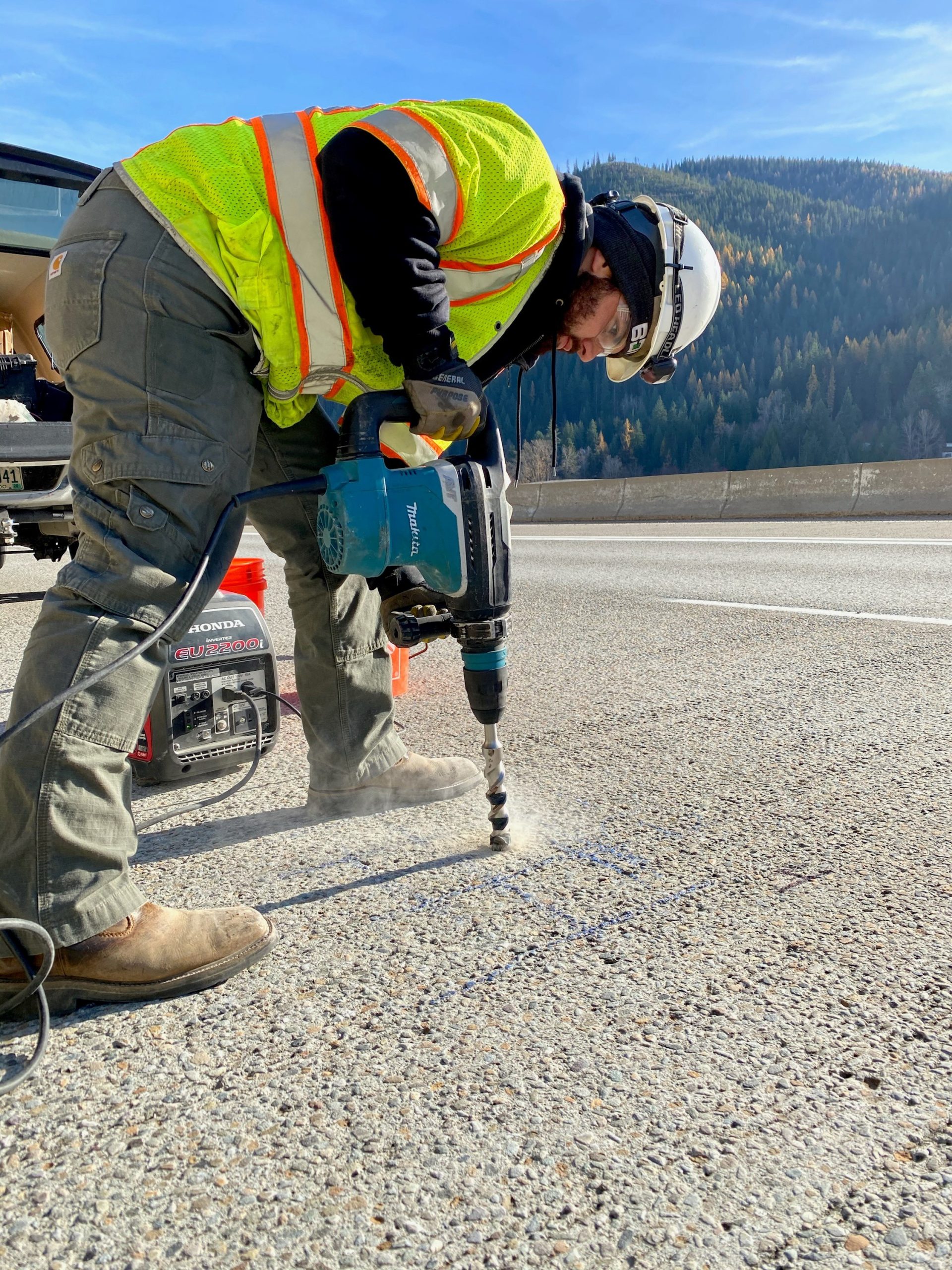
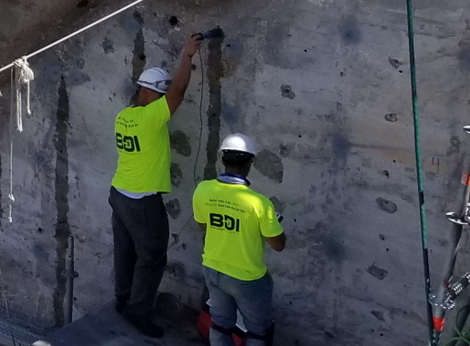
BDI utilizes a powder sample collection method developed in-house to gather concrete powder samples at varying depths within a concrete slab to measure chloride concentration at each depth to determine their ingress and possible impact on the steel reinforcement.

After connecting a test probe to a single exposed point on the steel reinforcement for a section of concrete, a half-cell probe can be used to measure the corrosion potential of the reinforcement through the concrete to generate a map of locations at which steel may be corroding.

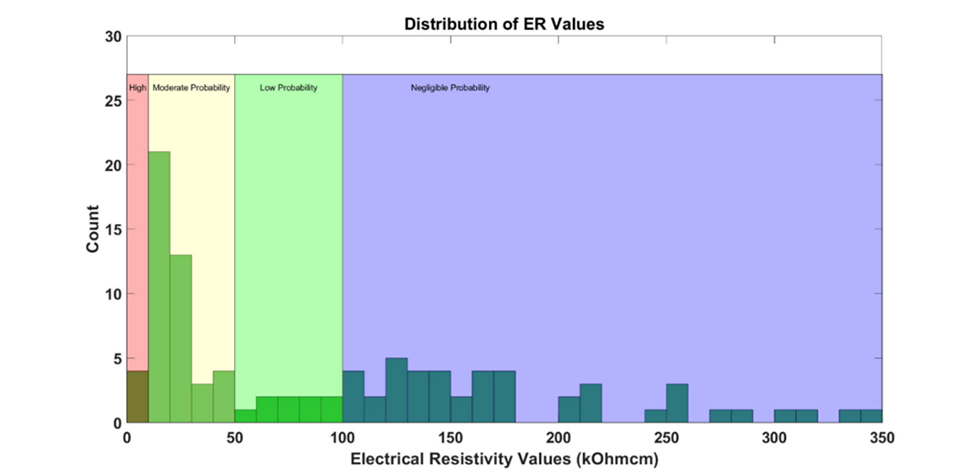
Using a four-point Wenner probe, the electrical resistivity of the concrete can be measured along test points on a grid to give an indication of possible corrosion taking place at the steel reinforcement.

Rapid Chloride Testing (RCT)

Concrete coring and material testing
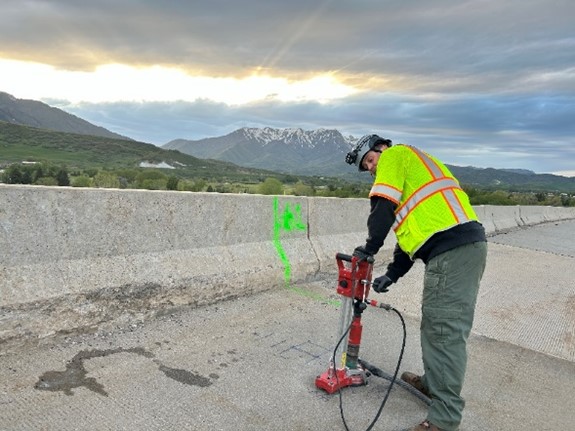
BDI utilizes a powder sample collection method developed in-house to gather concrete powder samples at varying depths within a concrete slab to measure chloride concentration at each depth to determine their ingress and possible impact on the steel reinforcement.

BDI complements its NDT-E capabilities with coring methods where minimally invasive material testing is needed to measure concrete compressive strength or petrography.

What We Deliver

Our post-processing workflows transform complex datasets into actionable insights, technical reports, CAD-based feature maps, deterioration statistics, and tailored repair recommendations, all aligned with local municipality or DOT mandates. BDI strives to find the best means and methods for communicating our work, results, and insights to bridge owners, we develop reports containing content and materials such as: